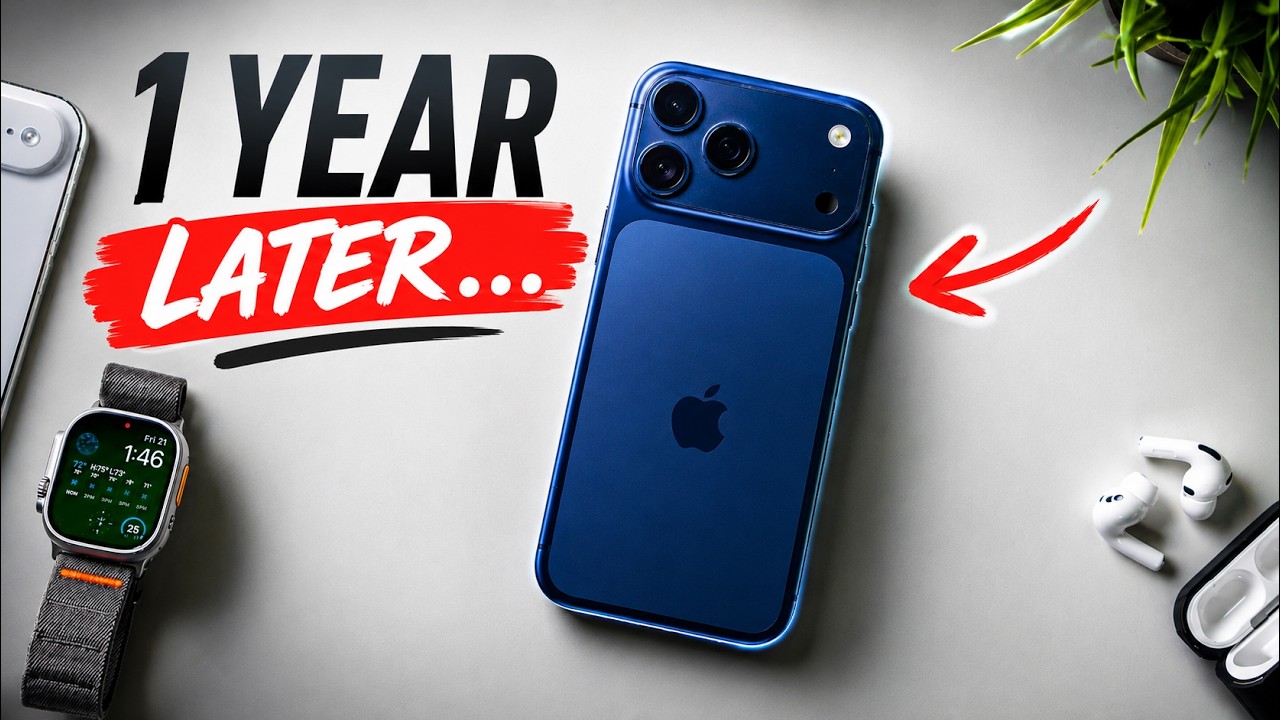
iPhone 18 Pro Max: 2 Weeks Later — One Thing Still Isn't Right
I've been using the iPhone 18 Pro Max as my daily driver for the last two weeks, and for the most part it's been really consistent — I'm ending most days with more than half my battery left. But there's one feature I still think needs a lot of work, and there have been plenty of reports from other owners about little problems with this phone. I tried to reproduce every one of them on my unit, mostly with no luck, but we'll go through all of them because I want to know if any of it is happening to you.
Quick Verdict
Two weeks in, the iPhone 18 Pro Max is solid: the battery is the standout (ending days at 50–60%), performance feels noticeably snappier, and it stays faster for longer thanks to the bigger vapor chamber. The variable-aperture camera is cool but not a reason to upgrade on its own — the built-in Pro camera controls are the real day-to-day win. The one thing that still isn't right is Siri AI: better than before, but still unreliable. If you're on a 17 Pro Max or 16 Pro Max, don't take your wallet out. If you're on an older phone that's slowing down or has a tired battery, this is a great upgrade.
Modem, Durability, and Design
Quick note first: I'm using the Canadian model, so I don't have the Qualcomm modem — that's only in the US Pro Max this year. Mine has Apple's own C2 modem. Some people say reception is better on the Qualcomm, and they're probably right (Qualcomm modems generally have the best reception you can get), but the C2 has been great — it held up in spots where I know reception is bad. Apple's modem is coming along nicely.
Durability has been great so far. It looks and feels like the last iPhone, though it's heavier at 249g, up from 233g on the 17 Pro Max. I wish phones were getting lighter, but that weight is the bigger battery and bigger vapor chamber — and I'd rather have both. Unlike my 17 Pro Max, which got scratched up quickly last year, mine has no scratches, though I've kept a case on it the whole time. Some people have posted scratches (scratching was a big story on the 17 Pro), and my guess is they're going caseless. There are also reports of discoloration around the camera lens rings on the burgundy and black versions — mine (black) doesn't have it, and it seems limited to a smaller number of people. Black is one of the best colors this year: safe and rich. Burgundy and Glacier stand out more, but if you can't decide, you can't go wrong with black.
The Problems Owners Are Reporting
1. Face ID. A lot of people say it isn't recognizing their face as well as previous iPhones. I've never had that — it's as quick as my 17 Pro Max. The Face ID camera now sits under the display in the top-left corner (which is what let Apple shrink the Dynamic Island), so that may be causing trouble for some. If yours is acting up, check your screen protector — part of Face ID is under the screen now, so a protector can interfere, especially a privacy protector (Apple's own support page says to remove those) or one made for the 17 Pro. My suggestion this year: use a case, but consider skipping the screen protector for consistent Face ID — the new glass has been excellent so far.
2. Freezing. The launch software had some stuttering and freezing, and some phones rebooted when Face ID failed. Apple fixed that in iOS 27.0.1, and I'm not seeing any of it now.
3. Earpiece crackle. Some people hear a crackle or pop from the top earpiece when scrolling websites, toggling airplane mode, or changing brightness. I've done all of that over and over and mine doesn't do it. Since it isn't happening to everyone, I don't think it's hardware — if it turns out to be widespread, Apple will probably patch it in software. Apple hasn't said anything yet, and owners say the last update didn't fix it. If it's happening to you, let me know.
On the speakers themselves: I love them. Some of the best speakers on a phone, period — coming from the iPhone Air, they sound like they're on another level.
The Camera: The Controls Matter More Than the Aperture
This year's pitch was the variable aperture — the lens physically opening and closing from f/1.48 to f/4. It's cool, but on a sensor this size it's not that important; on a much bigger sensor it would matter a lot more. I still think it's the right move, and my guess is Apple is getting the tech in place now for the day it puts a bigger sensor in the Pro models. In auto mode it mostly stays at f/1.8 or f/1.48, so it's not a reason for most people to upgrade. That wider f/1.48 does help in low light, with photos coming out a little cleaner than on the 17 Pro Max — but probably not upgrade-worthy either.
One thing nobody's talking about: set it to f/4 and shoot documents. At f/1.48 or f/1.8 you get a shallow depth of field and the edges of the page go soft; at f/4 more of the shot is in focus, and documents look much cleaner at the edges than on the fixed-aperture 17 Pro Max.
For me, though, the real camera upgrade is software: the Pro controls built right into the camera app. Over these two weeks I've constantly been locking white balance or setting shutter speed without opening a third-party app. What I don't get is why Apple won't bring these to the 17 Pro Max — aperture control needs the new hardware, but shutter speed and white balance are just software.
Performance and Battery
This phone feels ridiculously fast — opening apps, scrolling, moving through menus is all a little snappier. I don't know if Apple sped up the animations or it's the higher single-core clocks of the A20 Pro over the A19 Pro, but it feels like an upgrade. Combine that with the bigger vapor chamber: it still gets warm after 30 minutes of gaming, but heat spreads across the phone better, so performance stays higher for longer, where last year's model had to throttle a bit.
The standout feature is 100% the battery. It was good from day one, but in the first week the phone is still indexing for the new Siri and learning how you use it. Now that it's done, it's even better — I'm ending days with 50–60% left. I don't even look at the percentage anymore. Zero battery anxiety.
The One Thing Still Not Right: Siri AI
It's better than before and genuinely usable now — I ask a question and get a real answer instead of a list of website links or "I don't know." But I'm still not confident in it. Sometimes it misses what I said or doesn't hear me properly, and sometimes it fails completely. It's improved a lot, but Apple is still really behind, and I hope more improvements are on the way.
Should You Upgrade?
The reasons to move to the 18 Pro Max are performance, battery life, and a bit more consistency.
- On a 17 Pro Max or even a 16 Pro Max: don't take out your wallet — it's not worth it unless you get a great deal or you're an enthusiast like me.
- On an older phone that's slowing down or whose battery isn't what it used to be: yes, upgrade. It's going to feel great.
My first two weeks have been solid. I'll keep trying to reproduce these reported problems, and if any show up, I'll make another video — and a 30-day revisit may be coming for those of you buying a few months from now.
Where to Buy
Affiliate Disclosure: This article contains affiliate links. If you purchase through these links, we may earn a commission at no extra cost to you.
Published: October 2026