Samsung Galaxy S26 vs iPhone 17 — The Galaxy Costs More. Is It Worth It?
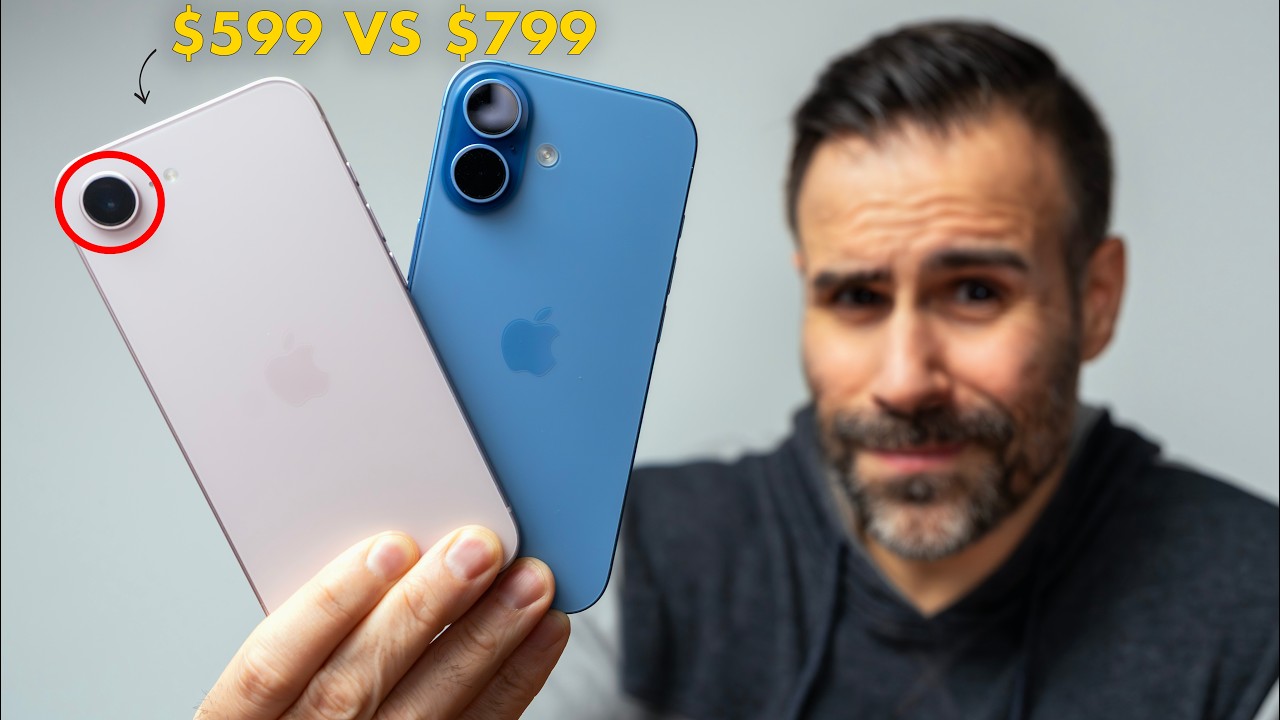
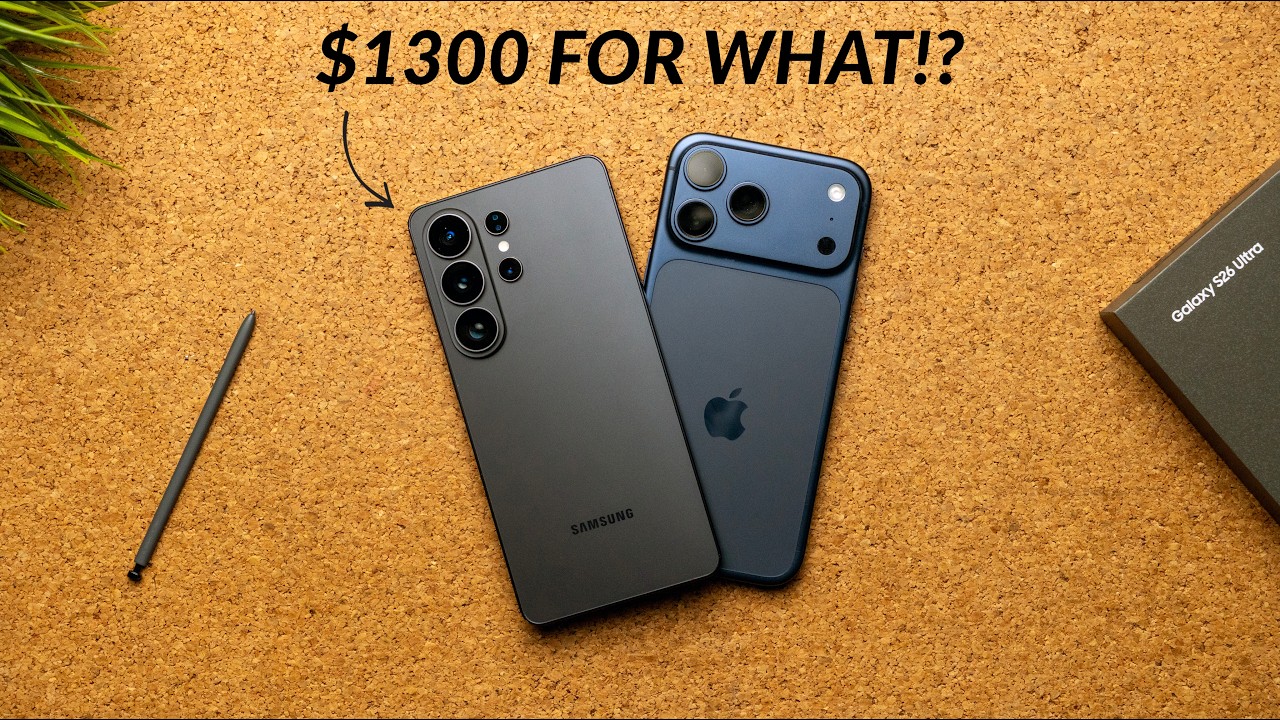
For the first time, the Samsung Galaxy S26 costs more than the iPhone 17. Not by a little — the S26 starts at $899 versus $799 for the iPhone 17. That's a $100 premium for Samsung. If you've been assuming Apple is always the expensive option, that assumption just got flipped. So the question isn't just which phone is better. It's whether Samsung's $100 premium is justified — and the answer depends entirely on how you use your phone.
Quick Verdict
If you're already in the Apple ecosystem, the iPhone 17 is the easy call — it's $100 cheaper and the integration with your Mac, AirPods, and iPad is real. If you're on Android or coming from a previous Samsung, the S26 offers something the iPhone 17 genuinely can't match: a triple camera system with real optical zoom. That telephoto lens is the S26's strongest argument, and it's a good one. The decision ultimately comes down to two questions: do you need zoom, and which software ecosystem makes your life easier?
Price: The Part Nobody Expected
Let's start here because it changes everything about how you frame this decision.
The iPhone 17 starts at $799 for 8GB of RAM and 256GB of storage. The Samsung Galaxy S26 starts at $899 for 12GB of RAM and 256GB of storage. Samsung is the more expensive phone. That's not a knock on Samsung — the extra RAM and the triple camera system are tangible things you're paying for. But if you've walked into this comparison expecting Apple to be the premium option, the pricing story is already different than you thought.
In India, the S26 comes in at around ₹75,000 for the base model. If you're buying there, confirm the current iPhone 17 pricing in rupees — the gap may work differently in your market. Either way, the price comparison deserves a second look before you assume one is cheaper than the other.
Design & Display
Both phones have a 6.3-inch display and are physically almost identical in footprint: 149.6mm tall, essentially the same width. The S26 is slightly thinner (7.2mm vs 7.95mm) and noticeably lighter at 167g versus the iPhone 17's 177g. If weight matters to you, the S26 wins on feel-in-hand.
The display story is more nuanced.
Both panels hit 120Hz — ProMotion on the iPhone 17, Dynamic AMOLED on the S26. Both claim 3,000 nits peak brightness. But in independent testing, the iPhone 17 measured 2,672 nits versus 2,425 nits for the S26. Not a dramatic gap, but the iPhone's display is consistently measuring brighter in real testing despite identical spec claims.
Pixel density is a clearer win for Apple. The iPhone 17 renders at 458 pixels per inch. The S26 is at 409 PPI. If you look closely at text, icons, or fine detail, the iPhone 17's display is sharper. Not everyone will notice in daily use — but it's there.
The S26 has an in-screen ultrasonic fingerprint sensor. The iPhone 17 uses 3D Face ID. Both are fast; which you prefer is personal. The fingerprint unlock works even if someone else is holding your phone (useful, situationally awkward). Face ID works in the dark and doesn't require your thumb at a specific angle (fast, hands-free).
Display Comparison:
| Metric | iPhone 17 | Samsung Galaxy S26 |
|---|---|---|
| Size | 6.3-inch | 6.3-inch |
| Type | OLED, ProMotion 120Hz | Dynamic AMOLED, 120Hz |
| Resolution | 2622x1206 (458 PPI) | 2340x1080 (409 PPI) |
| Peak Brightness (measured) | 2,672 nits | 2,425 nits |
| Weight | 177g | 167g |
| Thickness | 7.95mm | 7.2mm |
| Biometrics | 3D Face ID | In-screen fingerprint |
Performance: Split, Not a Blowout
The iPhone 17 runs Apple's A19 chip. The Galaxy S26 in the US and Canada runs the Snapdragon 8 Elite Gen 5 — Qualcomm's latest. In most international markets, it ships with Samsung's Exynos 2600 instead. That regional split matters, and I'll get to it in the battery section.
In benchmarks, the story is split. The iPhone 17 wins single-core performance — which is the number that most closely maps to how snappy your phone feels opening apps, swiping between screens, and doing everyday tasks. The S26 wins in multi-core and demanding GPU workloads. And the S26 also has 12GB of RAM to the iPhone's 8GB — that extra headroom shows in sustained multi-app use and more demanding tasks.
In real-world use, both phones are fast. Neither is going to feel slow. The iPhone 17 has an edge in day-to-day responsiveness. The S26 has an edge in heavy multitasking and peak GPU loads.
Performance Benchmarks (iPhone 17 vs S26 Snapdragon):
| Test | iPhone 17 | Samsung Galaxy S26 | Winner |
|---|---|---|---|
| GeekBench 6 Single-Core | 3,527 | 3,186 | iPhone 17 |
| GeekBench 6 Multi-Core | 8,798 | 10,944 | S26 |
| 3D Mark High | 5,172 | 6,607 | S26 |
| 3D Mark Low | 3,295 | 3,064 | iPhone 17 |
| RAM | 8GB | 12GB | S26 |
Camera: The S26's Strongest Argument
This is where the S26 makes its clearest case. The Samsung Galaxy S26 has three cameras. The iPhone 17 has two. And the one the iPhone 17 is missing — the telephoto — is a real gap.
The S26 main camera is a 50MP Samsung GN3 sensor with standard OIS. The iPhone 17 runs a 48MP sensor with sensor-shift OIS, which is more mechanically precise — the sensor itself moves, compensating for shake across more axes. Sensor-shift OIS shows up most in low-light stills and handheld video. In daylight, both are excellent.
The ultra-wide cameras are where it gets interesting. The iPhone 17's 48MP ultra-wide is a higher resolution sensor. The S26's 12MP ultra-wide uses a Sony IMX564 with larger 1.4μm pixels — which means better light collection despite fewer megapixels. In bright light, the iPhone 17's ultra-wide captures more detail. In low light, the S26's larger pixels hold their own.
Then there's the telephoto — 10MP with 3x optical zoom on the S26. The iPhone 17 has no telephoto at all. If you shoot portraits, architecture, events, or anything where you need to pull a subject out of a crowd, the S26 wins this category outright. Digital zoom on the iPhone 17 is a workaround; optical zoom on the S26 is the real thing.
Front cameras: the iPhone 17 has an 18MP shooter with time-of-flight autofocus and Center Stage — it keeps you in frame automatically during video calls. The S26 has a 12MP front camera. For selfies and video calls, the iPhone 17's front camera is measurably better.
Video: the iPhone 17 shoots 4K/60 with Dolby Vision and Cinematic Mode. The S26 shoots up to 8K/30 and 4K/60 with continuous autofocus. The S26's 8K capability is technically impressive; most people will shoot 4K. At 4K, both phones are excellent — Cinematic Mode gives the iPhone a creative edge for video content, while the S26's triple camera system gives you more angles to work with.
Camera scores from independent testing put both phones within one point of each other overall (iPhone 17 at 150, S26 at 149). The gap is in versatility — the S26 wins; the iPhone wins on stabilization and front camera quality.
Camera Comparison:
| Feature | iPhone 17 | Samsung Galaxy S26 |
|---|---|---|
| System | Dual camera | Triple camera |
| Main | 48MP, sensor-shift OIS, f/1.6 | 50MP (GN3), OIS, f/1.8 |
| Ultra-wide | 48MP, f/2.2 | 12MP (Sony IMX564), f/2.2 |
| Telephoto | None | 10MP, 3x optical, f/2.4 |
| Front | 18MP, ToF AF, Center Stage | 12MP |
| Max video | 4K/60, Dolby Vision, Cinematic Mode | 8K/30, 4K/60 |
| Camera score | 150 | 149 |
Battery & Charging: Know Your Region
The S26 has a 4,300mAh battery. The iPhone 17 has 3,692mAh. On paper, the S26 should last longer.
Here's where the Exynos situation matters significantly.
If you're buying in the US or Canada, you're getting the Snapdragon 8 Elite Gen 5. In real-world screen-on-time testing, the Snapdragon S26 delivers around 9.5 hours of screen-on time. That's genuinely strong. If you're buying in the UK or most of Europe, you're getting the Exynos 2600 — and in testing, the Exynos S26 hits around 6.8 hours of screen-on time. That's a 28% drop in battery life from the same phone with a different chip. Before you buy the S26 outside North America, know what chip you're getting.
The iPhone 17 Apple rates at 30 hours of video playback. In real-world screen-on-time testing it comes in around 11 hours — shorter than the Snapdragon S26 by a meaningful margin.
Charging: the S26 charges at 45W wired. The iPhone 17 charges at 40W. Both are fast; the S26 has a slight edge. The iPhone 17 supports MagSafe wireless charging at 25W. The S26 supports wireless charging but not MagSafe.
Battery Comparison:
| Metric | iPhone 17 | S26 (Snapdragon) | S26 (Exynos) |
|---|---|---|---|
| Capacity | 3,692 mAh | 4,300 mAh | 4,300 mAh |
| Screen-on time | ~11 hours | ~9.5 hours | ~6.8 hours |
| Wired charging | 40W | 45W | 45W |
| Wireless | MagSafe 25W | 15W (no MagSafe) | 15W |
Everything Else That Matters
A few things worth flagging before the verdict:
USB: The S26 has USB 3.2 — faster file transfers to a computer. The iPhone 17 uses USB 2.0. If you're regularly moving large video files off your phone, this gap is real.
SIM: The S26 supports a physical nano SIM plus eSIM. The iPhone 17 is eSIM only in several markets. If you travel frequently or want to pop in a local SIM card, the S26 has more flexibility.
Software updates: Samsung commits to 7 years of OS updates on the S26. Apple doesn't make an explicit commitment but historically supports iPhones for 5–6 years. Both are in the same ballpark; Samsung made it official.
Satellite SOS: The iPhone 17 has satellite emergency SOS. The S26 does not.
AI: Both phones have AI features — Apple Intelligence on iPhone 17, Galaxy AI on S26. Apple's on-device AI runs faster with less latency. Samsung's implementation has more features on paper. Which matters to you depends on how you actually use AI features on a phone.
Who Should Buy Which?
Buy the iPhone 17 ($799) if:
- You're in the Apple ecosystem — Mac, AirPods, iPad — and the integration matters to you
- You don't need zoom; the dual camera system covers most shooting scenarios
- You want the better front camera and front-camera video stabilization
- You want MagSafe and the broader accessory ecosystem around it
- You prefer Face ID or are eSIM-only
Buy the Samsung Galaxy S26 ($899) if:
- You shoot zoom regularly — portraits, events, anything where you need to isolate a subject
- You're on Android and want to stay there
- You want more RAM and USB 3.2 for productivity and transfers
- You want a physical SIM slot for travel or local SIM flexibility
- You're in India, the US, or Canada — where you get the Snapdragon chip and its battery advantage
Pricing and Where to Buy
Final Verdict
The Samsung Galaxy S26 is the better camera phone if versatility is what you're after. The 3x telephoto alone is a real-world advantage that the iPhone 17 simply doesn't answer. The extra RAM, USB 3.2, and lighter weight round out a strong hardware package.
But it costs $100 more — and that framing matters. The iPhone 17 delivers a sharper display, a better front camera, MagSafe, and a tighter ecosystem at $799. For most people who are already on iPhone and don't specifically need zoom, the iPhone 17 is the easier, cheaper, and better-integrated choice.
If you're genuinely undecided between platforms: the telephoto is the S26's best argument. If you don't shoot zoom and you're already in Apple's world, save the $100 and stay there.
Affiliate Disclosure: This article contains affiliate links. If you purchase through these links, we may earn a commission at no extra cost to you.
Published: April 2026